May 12, 2026

Ep. 097 - Where Should Christians Give First?

When it comes to generosity, many Christians ask the same question: where should I give?

It is an important question, and for many believers, it can feel surprisingly difficult to answer. There are more opportunities to give than ever before. Between local churches, missionaries, nonprofits, relief organizations, and countless charitable causes, the options can feel overwhelming. Most Christians are not struggling with whether generosity matters. They are struggling with how to prioritize it. That is why having a biblical framework for giving matters.

Show Notes

Generosity should not be driven merely by emotion, convenience, or whichever need feels most urgent in the moment. Scripture gives believers a clearer framework—one that helps us give with wisdom, conviction, and purpose.

A helpful way to think about this is through the image of a target. At the center is the local church. The next ring is gospel proclamation and gospel in action. The outer ring is caring for the poor. This simple framework gives Christians a practical way to prioritize generosity in away that reflects the heart of God.

The Center of the Target: Your Local Church

The first priority of Christian giving should be the local church.

This principle is rooted throughout Scripture. In the Old Testament, God’s people were instructed to support the temple, the priests, and the work of worship. In the New Testament, that pattern continues as believers are called to support the local body and those who labor in teaching and shepherding.

Paul writes in Galatians 6:6, “Let the one who is taught the word share all good things with the one who teaches.”

In 1 Corinthians 9:14, he adds, “The Lord commanded that those who proclaim the gospel should get their living by the gospel.”

The local church is not simply one charitable option among many. It is the primary spiritual community God has given believers for worship, discipleship, accountability, care, and mission. This is where Christians are fed spiritually. It is where they are discipled, encouraged, corrected, and cared for in times of need. It is also where they join together in worship, mission, and service.

Giving to the local church is not merely financial support. It is an act of commitment. It is a way of saying, “This is where I am planted. This is where I am being formed. This is where I am participating in the work of God.” For many families, it is also one of the most visible ways children learn what faithfulness looks like. They see that generosity begins with giving back to God through the local body.

The Second Ring: Gospel Proclamation and Gospel in Action

After the local church, the next priority is supporting gospel proclamation.

This includes missionaries, church planters, evangelistic ministries, and organizations that explicitly proclaim the gospel while doing tangible work in the world. This is the second ring because the spread of the gospel is central to the heart of God.

Paul asks in Romans 10:14–15, “How are they to hear without someone preaching? And how are they to preach unless they are sent?”

The sending of gospel workers has always required the support of God’s people.

Some of these ministries are focused almost entirely on direct evangelism. Others meet physical needs through medical care, clean water, anti-trafficking work, education, or relief efforts while also proclaiming Christ.

That distinction matters.

There are many organizations doing meaningful and necessary work in the world. Christians should be thankful for that. But when deciding where to give, believers should place special weight on organizations that care for both physical and spiritual needs.

The Christian vision of generosity is not only concerned with temporary relief. It is concerned with eternal restoration. When possible, Christians should prioritize ministries that both serve people and point them to Christ.

The Outer Ring: Caring for the Poor

The outer ring of Christian generosity is caring for the poor.

This is not an optional concern. Scripture is clear that God cares deeply for the vulnerable, the poor, the widow, and the oppressed. Christians are called to do the same. But even here, Scripture gives shape to how we should think about this responsibility.

First, believers should consider needs close to home. Scripture gives particular attention to caring for one’s own family, especially extended family members in genuine need. Then the circle widens to fellow believers. The early church consistently cared for brothers and sisters in Christ who were suffering, poor, or in crisis.

Beyond that, Christians are called to love their neighbors more broadly, showing mercy and compassion to those around them. The example of the Good Samaritan reminds believers that love for neighbor is not abstract. It is practical, sacrificial, and personal.

But caring for the poor is not simply about handing out money. Biblical generosity is relational.

Sometimes the most faithful response is financial help. Other times, what someone needs most is time, attention, wisdom, advocacy, or practical support. A quick gift may relieve discomfort in the moment, but deeper care often requires relationship. This is slower. It is more costly. But it is often far more loving.

Generosity Is More Than a Transaction

One of the most important truths in Christian giving is that generosity is not merely transactional. Giving is not just about transferring resources. It is about stewardship, worship, and relationship. God has not simply called believers to distribute money. He has called them to love people.

That means Christian generosity should never be reduced to percentages, tax deductions, or charitable efficiency alone. Those considerations may matter, but they are not the center. The center is faithfulness.

The goal is not simply to give something away. The goal is to steward what God has entrusted in a way that reflects His heart. That requires wisdom. It requires prayer. It requires open hands. It requires discernment about where money should go, but also humility about what God maybe asking beyond money.

Sometimes the most generous thing a person can offer is not a check, but time. Sometimes the most faithful gift is not financial, but relational. And sometimes wise generosity means not just asking, “What should I give?” but asking, “Who is God calling me to love?”

Give With Wisdom, Open Hands, and Purpose

Christians are called to be generous because God has been generous to them. Everything believers have belongs to Him. Time, money, influence, relationships, and resources are not possessions to cling to, but gifts to steward. That is why Christian giving should be marked by both wisdom and freedom.

Give freely. Give thoughtfully. Give prayerfully.

Support the local church. Invest in gospel proclamation. Care for the poor.

And in all of it, remember that generosity is not just about where money goes. It is about becoming the kind of person who reflects the heart of God.

Questions to Consider

  1. Does my giving reflect biblical priorities, or is it mostly shaped     by emotion and convenience?
  2. Am I faithfully invested in my local church, both financially and     relationally?
  3. Do the ministries I support clearly align with the gospel and the     heart of God?
  4. Am I using generosity to love people, or simply to relieve my own     discomfort?
  5. Is God calling me to give more than money in this season—perhaps my     time, attention, or presence?

Bible Passage: Galatians 6:6, 1 Corinthians 9:14, Romans 10:14-15 (ESV)

6 Let the one who is taught the word share all good things with the one who teaches.

14 In the same way, the Lord commanded that those who proclaim the gospel should get their living by the gospel.

14 How then will they call on him in whom they have not believed? And how are they to believe in him of whom they have never heard? And how are they to hear without someone preaching? 15 And how are they to preach unless they are sent? As it is written, “How beautiful are the feet of those who preach the good news!”

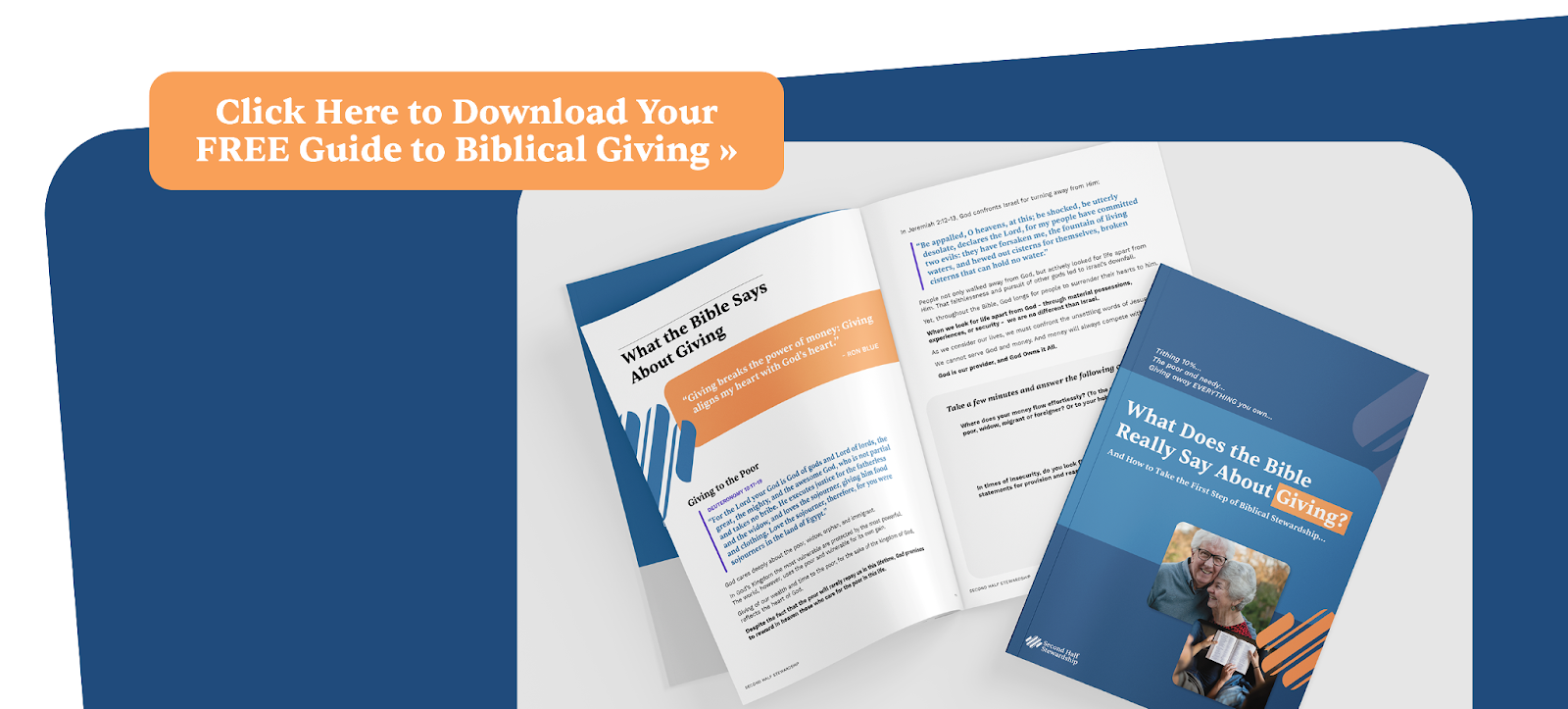
Want to Take the First Steps of Biblical Stewardship?

Download this free guide to Biblical giving and we’ll unpack what the bible says about tithing, giving to the poor,
or giving away everything you own for the sake of the Kingdom.

Links

Ep. 097 - Where Should Christians Give First?

0:00

Episode Transcript

Austin

When it comes to giving, we want to be generous stewards of the resources God has entrusted to us. But the question often arises, where should I give? With so many needs and opportunities, it can feel overwhelming. Today we'll explore a biblical framework for giving that brings clarity and peace of mind. Picture a target. The center is your local church.

The next ring is gospel proclamation and gospel in action. And the outer ring is caring for the poor. This simple visual will help us prioritize giving in a way that honors God and reflects his heart.

So, Spencer, today we're going to come back to a topic that we have discussed in the past, but it's just this idea of where should I give? And I think, you know, we've talked about how much should I give? How should I give in a logistical manner? Today we really want to focus on how do I select those charities that align the passions that God has with the passions that he's placed in my heart?

The reality is, there are hundreds and thousands of charities that you could give to you. There's so many different causes from save water to rescuing slaves, from trafficking to gospel proclamation to your local church. There are so many things that we can give to you that there may feel an overwhelming abundance of opportunity. And so when we think about giving charitably, we really want to focus on what are those things that God really cares about.

And then where are those areas where he has created me and desires for me to make an impact? And so we come back to this idea from Cameron Doolittle's book called Joy giving. The he uses this target framework. And if you think about the bullseye analogy, the center is our church. The next layer out is gospel missions. Speaking the Word of God with hands in our feet and our actions as well.

And that last area is giving to the poor. So that's kind of the framework that we're going to think about this in. But any other thoughts on why this question is really important?

Spencer

Well, it can feel dizzying. Just the number of institutions, people that are reaching out to us and saying, hey, consider supporting us. We have to have some way of being able to pass through those different options. And also, we, I think, need to recognize our limitations in that if we don't have enough time to pray for a thousand different institutions, we probably shouldn't be giving financially to a thousand different institutions.

So research would suggest that meaningfully, you can engage in maybe a half dozen different institutions. You go beyond that and your attention, really the focus there is not going to be nearly as significant. So we try to kind of bear in mind that rule as we personally think about who we give, who we support to. Can we add, you know, one more institution into a weekly rhythm of prayer and being able to check in with that institution and really understand what's going on within their operations?

Austin

Absolutely.

Okay. So let's start off and look at that target illustration and start with that center ring. Why would we suggest that the center giving to our local church is really the first priority?

Spencer

Well, this goes back, you know, even to the Old Testament. You know, when we think about the trajectory of of what God has told us as we steward his resources, you know, people in the Old Testament, they were instructed to give to the Levites, to the temple and to the poor. You know, in that order, essentially. And, that the tithes would go, you know, principally first to, basically the local congregation to, those who were caring for the temple, those, who are serving as the priests.

So, you know, we look at that and then that is continued in the New Testament in so many different places of, instruction, whether it be Paul or other people telling us to give, to the local congregation, to those leaders, to be able to help support the local ministry.

Austin

Right. Absolutely. Well, and as I think about this, as well as the local body of believers that I am worshiping with, that I am in community with, those are going to be the people that prayerfully, when I come upon a hard time, are going to be wrapped around me. I need to be invested in a local body of believers.

The friends that we see, the people that we know, that distance themselves further and further and further from community, especially from their church community. The harder it gets to walk with the Lord. And so I think giving is a way that we lay down God's resources back to him and say, I am committed to being here, to partnering with you, to seeing where you are discipling and leading us into worship, where the church is calling us to mission together and being able to give their says.

Not only am I choosing to place my feet here, but I'm choosing to lay down what oftentimes I see as my own back before the Lord. And I think it's just a very symbolic way. When the offering plate comes by, to be able to then place the money into that plate, I think it's a really good, practice for me and my kids as they see, hey, we know that dad gives to church.

Some of these other institutions, it sometimes feels a little bit distant, but that local body often feels so powerful. And we really need to say stay connected with that local body.

Spencer

Well, that was the example from the beginning. You know, we talked about the apostle Paul. You know, Galatians 6:6. Let the one who is taught the word share all good things with the one who teaches. 1 Corinthians 9:14 in the same way the Lord commanded that those who proclaim the gospel should get their living by the gospel.

And this is why we see this in the Old Testament as well, in, providing for the priests. So this is this is something that we see through the continuity of, you know, all ages that the Lord has placed as a priority in terms of how we look at stewardship in our own lives. Now, every now and then we also have, friends or we have, clients or others that we interact with in the community that say, you know, I'm really not as connected to a local body or maybe even more significantly.

I'm not sure that the local body that I'm connected to needs those funds or, perhaps that they're stewarding those funds. Well, what what would be our response to those kinds of situations?

Austin

You know, to those responses, Spencer, I think the reality is there's never going to be a perfect organization that does everything right. And if we are creating reasons why we shouldn't give to our local congregation, we really need to look back inwardly and say, is this more reflective on me and my desire to hoard these resources? Or is this a reflection of maybe this church actually isn't stewarding these resources?

Well, maybe I need to have a conversation with the finance committee. Maybe I need to have a conversation with the pastor. I think that's a place where we really start to say with clients, we need to have harder conversations. We need to engage those harder places of, well, why is it that you don't trust them? What is causing that?

Maybe hesitancy to get involved there? Because really, our resources should flow back to the Lord, to his church pretty freely. And if there are hesitations of why we're not giving to the church, then we really need to reflect on, okay, what what is it within me that is causing me to to want to hold these resources.

Spencer

Well and to us, both of us? I think we would say if if we have those questions and we're we're holding those resources back, that's probably the least of our problems. I mean, we, we counsel everyone to be involved in a local body. And, they're not going to perfectly use all of the resources, but let those resources go.

You know, you have a lot bigger and more significant questions of whether you need to be engaged there if you don't trust them with funds. At the end of the day. So we want to come back to that just again. We have open hands if we see that there are indeed things that we need to be very concerned about, the level of stewardship within a body, maybe we don't need to actually be in that body.

Maybe we need to to explore other options and lay our lives down in other ways.

Austin

Absolutely. But I think asking the question of stewardship are these institutions, whether it's my local church or as we look into missions organizations next, are they stewarding these resources? Well, it is a question that we should ask, but it should not stop us from giving. It should not stop us from releasing those resources back to the Lord. There may be there are going to be institutions that use and steward God's money better than others.

It's just a fact. But I think if we are trying to control the narrative, that's where the danger comes. And so even as we look at that second ring, this idea of sending people to share the gospel, whether it is they are actual missionaries that their sole focus is seeing people reach for Christ, they are proclaiming the gospel, or these are institutions that are maybe doing social justice type of work that are combining that with gospel proclamation.

Austin

We want to say that's that second ring. And even as I think about this idea of stewardship here, you know, we worked with the missions organizations that had a 13% admin charge. And when we told donors, hey, 13% of your donation is going to be taken straight off the top and given to the organization. There were often questions of, was that good?

Is that wise? We could then break it out and say, well, yes, here's kind of where it goes. Some of it does go to keep the lights on it, the headquarters, but also there's a significant portion that goes to other missionaries that are in places that they can't raise support in the Middle East, or that it's harder to raise support, maybe in, poorer countries.

Austin

And so, you know, even as we think about the admin cost, how are these places stewarding those resources? Ask the question. But again, don't make it be a reason to stop giving. So what else is really the focus there as we think about sending for gospel proclamation or gospel in action?

Spencer

Well, I think we come back to we. We long for everyone in the world to be in relationship with God. Yeah, that is his heart. He has put image bearers here that we spread the good news in essence. And, you know, Romans 10:14 and 15 asks, you know, Paul asks, how are they to hear without someone preaching? And how are they to preach unless they're sent?

Now there are some folks who are sent and they are by vocational, for the most part, those folks who go and they proclaim the gospel. They are among those who are supported financially to do so, and they're not usually living high on the hog. But usually, you know, they're supported in ways that, they can move to, you know, another country or a place that does not have a gospel witness and be able to share and proclaim.

Now, sometimes as well, they're doing some other wonderful things. They may be, serving as a dentist in that area or a medical professional, or they may be digging wells, or they may be an engineer. They do all kinds of different things, and that's wonderful. But as people go, I think we need to recognize that the example of the early church, Paul among them and and other examples certainly as well, was that there was, local there were local congregations who were giving to send missionaries to help take care of their costs and their expenses and such.

Spencer

Going and sharing the gospel.

Austin

Absolutely. And so in the future, we'll get into this idea of impact investing, investing in businesses whose priority is gospel proclamation through some means or some mode wherein they are doing good work. This is not necessarily the frame that we're thinking about here. When we think about giving. We're thinking about giving again, like you were saying to missionaries who maybe in countries where it's impossible for them to do anything else for work, maybe their visa only says you can be a student or some other thing.

And so we're really thinking about that frontline missionary here. That's really what we're giving to you. And we'd say there are plenty of organizations out there that are doing good social justice action. As believers, though, we want to see that coupled with a gospel proclamation. So as I look at organizations, if I've got two organizations side by side that I could give to you, one is trying to eliminate human trafficking and it has a gospel witness with it.

Another is just elimination of human trafficking. I want to lean towards the one that has a gospel proclamation that says, you are being saved by the God of the universe, who looks upon you in your plight and brings you out of the slavery that gives you a freedom that is not just a physical freedom, but a spiritual freedom.

Austin

And he longs to be in relationship with you and redeem and restore you for eternity, and not just for a moment. And so as we think about that, that's kind of as I think in that middle circle, we want to say there's a lot of great organizations that is doing great work. But if there's organizations that really align with the gospel heart and proclaim the gospel, we want to lean more towards that direction.

So talk us through that outer ring, sponsor that idea of caring for the poor, because there's even some tearing in that that we want to think about. So walk us through that one.

Spencer

I think big picture when we think about giving to the poor, when we think about giving to others, to meet some of their needs. The overarching theme that we see within the Gospels, but also in the New Testament, is that we want to do this in love, that we want to do this in laying down our lives for the other person.

There are a lot of ways that we can make gifts that actually are not laying down our lives for the other person. It's almost as though we are trying to get rid of that. The person you know, out of our face, you know, in asking. So we need to be really careful. I think there are ways that we all have seen where we can give to people, but it just enables them to, really be harmed, you know, in greater ways.

You know, 1 Timothy 5 talks about really taking care of the poor within our family. So this would be our extended family. And it's not so much a passage that is talking about, you know, a father providing for his nuclear family, but it's more, if you have people within your extended family, widows or others, that are impoverished, helping to take care of them.

So I think that's one of the first kind of inner areas that we would take care of is our biological family. That's a clear scriptural reference there. We think more broadly, though, and this would be indicative of what Paul did actually in raising funds for the church in Jerusalem that was poor. So Paul, as he traveled around as a missionary, of course, he was supported by various churches, but he also raised funds to be able to take back to Jerusalem and help the impoverished there, because there were brothers and sisters, who were there in great need, as there were a series of famines that had hit there.

So there is a clear admonition there, or an example within Scripture that we're also looking to our Christian brothers and sisters and taking care of them. I think then more broadly, we look and we see in a passage like, from the Good Samaritan that, that we we do have an obligation that we have, an example of taking care of those around us.

So I think you could make a case that geographical proximity would have some, speaking into that. But even, now that we're interconnected more globally now than ever before, you could make the case for that as well. But we kind of think about these concentric circles, you know, moving out of how we take care of those around us.

We can't take care of, you know, 7 billion people, within the world. And I don't think that this is a way that we should, hold people at arm's length that would be in impoverished, you know, nations. And I don't think this is, you know, something that we can use to say, oh, I should not be giving to anyone around the world that is poor.

Instead, I think when we look at the Gospels and as we look at the New Testament, the early church, there was a lot of, cutting into one's own spending on behalf of taking care of others. I think that is the, the witness of the New Testament, the early church that we can see. So how we do that in, you know, our modern age where we're so interconnected, I think we need a lot of dependance on the Holy Spirit, but we also need to come back to some of these other questions of how much is enough and really abide by that, so that we have more space to give, because

we can easily justify our spending decisions, which can then impact how much we really have left to give back to others.

Austin

Right. And I think it comes really back to what you were saying in the beginning is how many relationships do I have capacity for? How many donation relationships do I have capacity for? And we think about giving through that context of relationship. And so if I have biological family or my brothers and sisters in Christ in need, or the person down the street or the person across the globe, am I willing to be in relationship with them as well?

Am I willing not just to give $20 to somebody that's asking on the street? But am I willing to say, let's go to lunch? Let me learn your story. How can we then help you grow? And maybe it's not just a meal that they need. It's maybe help finding a job, getting stepped on their feet. You know, there's so many different things that I think we we don't want to say don't give, but we also want to say, what are you doing to enter relationship with these folks?

It's really important as we think about giving. It's not just ever done in a single silo. Just like we talked in our previous episode that we don't give just primarily for a tax deductible reason. In this episode, we don't just give because we are told to give. We give because God has invited us into relationship, and we want to be those that invite our partners into relationship.

Pray for our churches, pray for those missionaries, pray with and alongside our biological family, our Christian family that are in need. And so really, as we think about this, we want to be wise in how we make those decisions. We want to be liberal with the resources that God has placed in our hands, because they're not ours. We're stewards, and so we need to be freely giving of those when the Lord calls us to give.

But we also want to be wise and prudent stewards.

Spencer

And we really come back as stewards to all of the different things in our lives, whether it's our finances, our relationships, our time, our influence. All those different pieces. Because sometimes, as you mentioned, we don't need to be handing out money. What we need to be doing is investing a half hour or an hour or an afternoon or whatever it might be, and that investment is a lot harder sometimes than just, you know, giving someone, a $20 bill or whatever it might be.

Absolutely. Well, Spencer, thanks for talking us through just the different ways that we can process who to give to, where to give. How do we do that wisely? Clients. If you'd like to talk more about where you could give charitably, we would love to our conversation with you. As always, feel free to leave comments below and we'll see you again next time.

Austin

If you found this episode valuable, share it with a friend and subscribe on your favorite podcast platform so that you don't miss the next episode.

Disclosure

This content was provided by Second Half Stewardship. We're in Knoxville, Tennessee, and you can visit our website at www.SecondHalfStewardship.com. The information in this recording is intended for general, educational and informational purposes only, and should not be construed as investment advisory, financial planning, legal, tax, or other professional advice based on your specific situation. Please consult your professional advisor before taking any action based on its contents.

But how do we actually become generous stewards?

Join us every other week as we explore what Biblical stewardship looks like regarding our money, time, relationships, gifts, and experiences.

Plus, get our complementary guide to Biblical giving, and answer the question: “What does the Bible really say about giving?”

Sign up for updates

Thank you! Your submission has been received!
Oops! Something went wrong while submitting the form.