July 7, 2026

Ep. 101 - How Should Christians Help Other Christians in Financial Need?

When a fellow Christian faces financial hardship, our instinct is often to ask a simple question: "How much money do they need?" While financial assistance may be part of the solution, Scripture calls us to think more deeply. As believers, we are not merely debt elimination technicians. We are stewards helping other stewards. Our goal is not simply to remove a financial burden but to help people move toward wholeness in Christ. Helping another Christian through financial difficulty requires wisdom, discernment, compassion, and a willingness to invest more than just money.

Show Notes

Poverty Is About More Than Money

When most people think about poverty, they think about a lack of financial resources. While finances certainly play a role, poverty is often much more complex.

A person may struggle because of a sudden medical emergency, job loss, disability, or caregiving responsibilities. Others may face challenges related to education, skills, relationships, habits, or life experiences. Still others may be dealing with fear, shame, grief, or other emotional burdens that contribute to financial difficulties.

If we focus only on the financial symptoms, we may miss the underlying causes. That's why effective help begins with understanding the whole person, not just the balance sheet.

Distinguishing Between Crisis and Patterns

Not every financial struggle is the same. Sometimes a person experiences a genuine crisis. An unexpected medical bill, a job loss, or another emergency creates a temporary gap between income and expenses. In these situations, immediate assistance may be exactly what is needed.

Other situations reveal longer-term patterns that need to be addressed. The issue may not be a one-time event but a series of decisions, habits, or circumstances that have accumulated over time. Discernment is essential.

Before offering assistance, it is important to understand what is truly driving the need. This does not mean approaching people with suspicion, but it does mean seeking clarity. Wise stewardship involves both compassion and careful evaluation. As the saying goes, trust—but verify.

Financial Help Is Often a Discipleship Opportunity

One of the greatest mistakes we can make is assuming that money alone solves financial problems. In many cases, the most valuable gift we can offer is our presence.

Helping someone budget, navigate medical bills, search for employment, develop new skills, or make healthier financial decisions often has a greater long-term impact than simply providing cash. This requires relationship. It requires time. It requires discipleship.

The church is called to be a community where believers walk alongside one another, bearing burdens and encouraging growth. Financial challenges often create opportunities for deeper conversations about stewardship, trust, contentment, generosity, and dependence on God.

The Church Has a Role to Play

The early church demonstrated remarkable generosity toward believers in need. When people faced hardship, the body of Christ came together to provide support and encouragement. Today's churches have the opportunity to do the same.

Many churches maintain benevolence funds or other resources designed to help those facing difficult circumstances. However, these resources are only effective if people know they exist and feel comfortable asking for help.

Financial hardship often carries feelings of embarrassment or shame. Yet many challenges are outside a person's control. A medical emergency, unexpected job loss, or family crisis does not automatically indicate poor stewardship. Sometimes life simply becomes difficult. The church should be a place where people can seek help without fear while also receiving the support and accountability necessary for long-term growth.

Think in Terms of Short-Term, Medium-Term, and Long-Term Solutions

Helping someone financially should rarely focus only on today's problem. A wise approach considers multiple time horizons.

Short-Term

Address the immediate crisis. This may involve helping with food, housing, transportation, medical expenses, or other urgent needs.

Medium-Term

Work toward stability. This could involve job training, education, budgeting assistance, debt reduction strategies, or addressing other underlying issues.

Long-Term

Build capacity and resilience. The goal is not merely survival but sustainable stewardship. Healthy financial habits, emergency savings, career development, and spiritual growth all contribute to long-term stability.

Real transformation takes time. Walking alongside someone for months or even years may be necessary to help them move toward lasting freedom.

Beware of Enabling

Compassion does not mean enabling unhealthy patterns. Sometimes individuals repeatedly experience financial crises because they refuse to change their behavior. While Christians are called to be generous, we are not called to support destructive habits indefinitely.

There must be a willingness to learn, grow, and pursue change. Helping someone financially while ignoring harmful patterns may actually prevent the growth they need most. Love and accountability are not opposites. In many cases, accountability is one of the most loving things we can provide.

Remember: You Are Not the Savior

Perhaps the most important lesson is this: You are not the Savior. It is easy to believe that if we just provide enough money, enough advice, or enough support, we can fix someone's situation. But lasting transformation ultimately comes from God.

We are called to be faithful stewards. We are called to love others well. We are called to walk alongside those who are struggling. Yet only God can change a heart. That reality should free us from carrying burdens that were never ours to carry while motivating us to serve faithfully where He has called us.

Final Thoughts

Helping Christians in financial need is rarely as simple as writing a check. Real help requires wisdom, discernment, relationship, accountability, and grace. It involves caring about the whole person rather than merely solving an immediate financial problem.

As stewards, our goal is not only to relieve suffering but also to encourage growth, responsibility, and deeper trust in the Lord. When we approach financial hardship through the lens of discipleship and stewardship, we can become instruments God uses to bring both practical help and lasting transformation.

Questions to Consider

  1. When someone asks me for financial help, do I focus primarily on the immediate need or on the underlying causes as well?
  2. How can I balance compassion and accountability when helping someone through financial hardship?
  3. Am I willing to invest time and relationship, not just money, when helping others?
  4. Does my church provide clear pathways for people to seek help during financial crises?
  5. In what ways might God be calling me to steward my resources to serve others while remembering that He alone is the Savior?

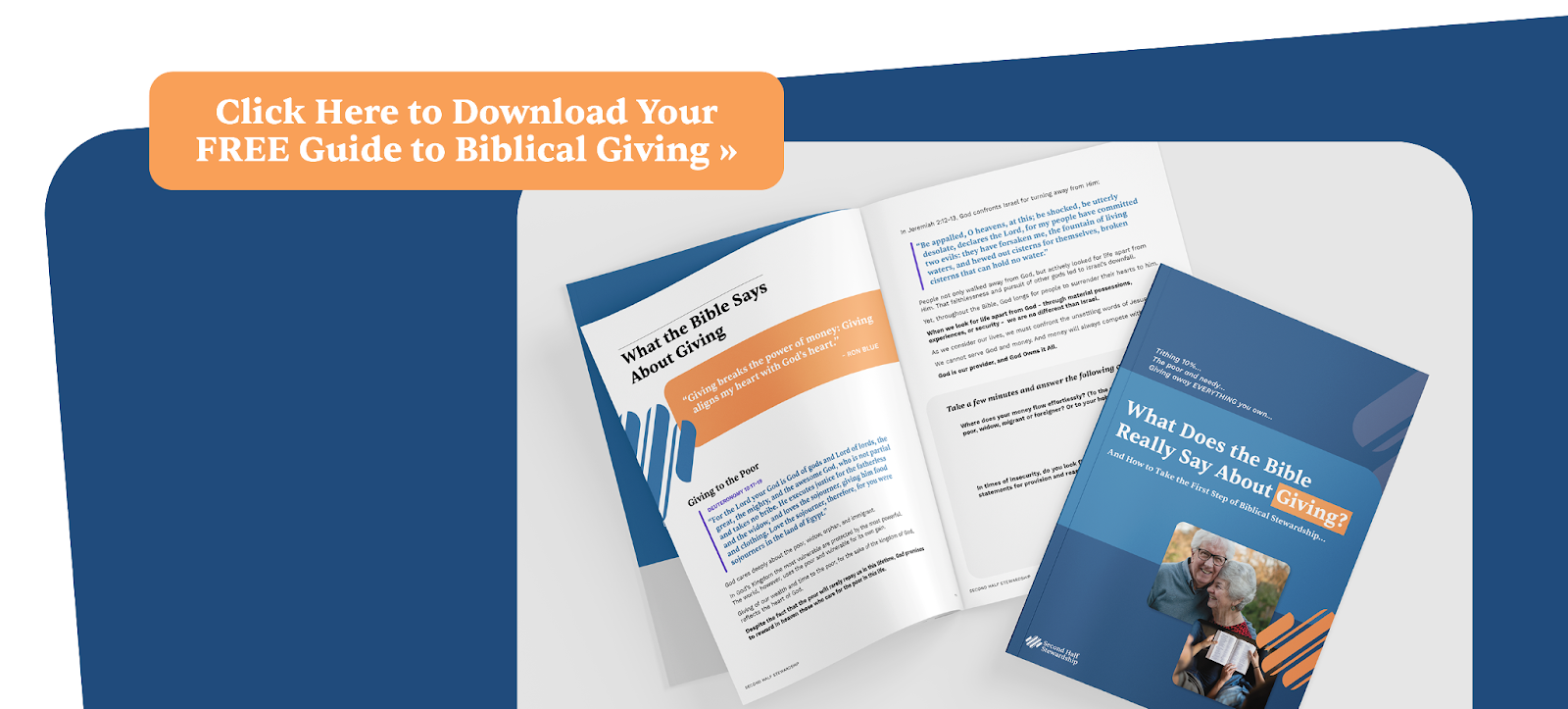
Want to Take the First Steps of Biblical Stewardship?

Download this free guide to Biblical giving and we’ll unpack what the bible says about tithing, giving to the poor,
or giving away everything you own for the sake of the Kingdom.

Links

Ep. 101 - How Should Christians Help Other Christians in Financial Need?

0:00

Episode Transcript

Austin

Christians are not merely debt elimination technicians. We are stewards. Discipling other stewards. Helping a brother or sister with debt means addressing the crisis, the habits, and the heart so that they obtain freedom not just from payments, but from fear, shame, and misplaced trust.

So, Spencer, in our last episode, we talked through how do we actually enter an agreement to make a loan to a brother or sister in Christ? We walk through the idea that sometimes it can make sense to do this. Sometimes it doesn't make sense to lend to a brother or sister, because there may be extenuating circumstances. So the reality, though, is debt.

Any time it is incurred is not merely a mathematical problem. There's some underlying emotion, whether it's grief, shame, fear there, there is a reality that we get into debt, not purely because we are making bad decisions. Sometimes it's things outside of our control. And I think as we start looking at, okay, how do I actually enter into a loving relationship with a brother or sister and how do I help them in their debt?

Sometimes lending makes sense, sometimes giving makes sense. But today we really want to look at that nuance of how do I actually help a brother or sister in need? So in this we really want to not just isolate debt. We really want to think about poverty. Then why is poverty such a big, contentious piece within our mental frame of how we think about the world around us?

Spencer

Well, poverty, there's so many different factors, you know, that that go into it and even just the financial side of poverty. So let's set aside, okay, we've got spiritual poverty that, you know, we may just have a relationship with the Lord that is very, very shallow, maybe is not good. We can be spiritually impoverished and maybe we have, you know, we're a billionaire, you know, so that's kind of a different situation that we'll be diving into today.

But when we think about poverty on a financial side and some of the spiritual ramifications, some of the spiritual inputs, you know, there too, I think we need to look at it from a standpoint that it's not just that I don't have enough income to pay for things, which creates maybe some debt, but it's more broad. So I think when we step back and we look at poverty as a big picture, it would be poverty is again, it's financial, but it's also the skills and capabilities that we might have to earn an income.

It would be the relationships that we have to, potentially gain a job to earn that income. It would be sometimes the disciplines that we have in life that are not necessarily the spiritual disciplines, although there is certainly overlap there, but it's it's just the disciplines of how we engage with other people. The, the words that we use, the patterns, you know, of which, we engage maybe culturally that, it could be that we, just don't have that same culture, you know, as a background.

And, and we've we've got to have some growth, you know, there in being able to, switch the way that we interact, you know, overall. So I think poverty, looks at things more holistically. And we and that allows us to say, okay, this isn't just, you know, income over here on the one side is not meeting expenses over here on the other side.

It's more of, you know, looking at things and saying there is a root cause here. There might be many root causes here, but there usually are a couple of them. What is that? And how do we start to come alongside a brother or sister to deal with that root cause? Because, you know, for instance, the math is very simple here.

If we don't have enough income, so income is less than outgo. If we give a loan, there's not going to be any way that that loan is going to be repaid, because you're just going to be adding to that loan over time. So in that set of circumstances, if the income versus the outgo is, misaligned, we've either got to say, okay, well, how do we get to a point where there's more income or how do we get to a point where there's less going out or both?

Or we might just say, this is a crisis situation. It's going to be like this for a finite period of time. It might be three months, six months, a year, or you might say, well, this is a case that's very, very difficult. And we have, you know, medical needs that are going to be ongoing. That's indefinite. And we're just going to have to support them as the body of Christ and love them well.

But there has to be clarity, I think, in terms of the root cause and then how we are prepared to engage with that root cause.

Austin

Right, absolutely. Well, I think so much of it comes back to a discipleship piece. Are we willing, as people that have resources to step into relationship, to say, I, I'm willing to spend my time and not just help with money. Sometimes it can actually just be easier to say, hey, I'm just going to give some money, stay far away.

But the reality is this becomes a discipleship piece. It becomes, how am I entering relationship with you to take steps together towards wholeness in Christ as a community of faith? Because what I bring is different than what they bring. We look all across Scripture, whether it's 1 Corinthians or Romans, and where Paul talks about we are a body of Christ.

If everyone were an eye, where would be the sense of hearing? If everyone were a hand, how would we be able to move around? The reality is, even someone in poverty shares a different aspect of the imago day the image of God than I do. And so for us to be a whole body of Christ, I need them well.

And that doesn't just mean they're out of financial poverty, it means that they are growing together in Christ. So let's go ahead and move on and start thinking about how do we look at different aspects of poverty, whether it is emergency poverty or poverty of decision. So as we think about this from a debt perspective, let's talk about the difference between things like a medical job, medical bills, job loss, caregiving disasters versus the consumer choice, poverty.

So you want to walk us through how do we differentiate as we look at our brothers and sisters in poverty?

Spencer

Well, coming alongside is so critical and there needs to be a level of verification. And sometimes that just happens via the depth of relationship. And, you know, because you've been walking alongside them and they maybe never even asked for help, but you said, okay, you know, let me, let me do what I can here. Maybe, maybe you know, this, but, oftentimes there's not a level of verification of actually, what is the issue.

Yeah. You know, we've seen circumstances where, you know, online sports gambling, you know, became a significant issue, but it wasn't actually disclosed or shared. So you've got to be pretty careful that you actually know what is driving this, because, to your point, it could be, the lifestyle decisions, you know, I remember, a, an interview that was done with a lady that was a little bit shocking.

This was when I was, I think in, in high school, but she talked about how she was feeding her family of and she had six kids. So a family of eight, she was feeding them for dinner on something like an average of $12, you know, per meal. And the host just said, how in the world can you even do that?

That's impossible. And she said, no, I I've got the receipts here. I can show you, you know, she said, now we have rice and beans five times a week, you know, and she had some vegetables and some other things, but basically very, very, very simple diet. She prepared everything. But she had found that, she could feed her family on a very, very, low level of income.

You know, we I think we both chuckle when we hear Randy Alcorn speak sometimes because he will pose these really abrasive questions. And it's not around so much income outgo here other than as it relates to tithing. But he'll say, you know, if you're not tithing right now, if you're not, giving 10% to the church or the charities, if you took that step and you did, so would you die?

You know, and it's that bracing question and you say, okay, no, I could figure out a way. I just don't want to, you know, like the, the, the consumer lifestyle. I think that's where, you know, we can we can start to identify, oh, there are a lot of levers, you know, that we could pull over here now, there might not be.

I mean, there's legitimate situations that we've both come across where there's there's really nothing that can be done. You know, you're already going to, you know, get, assistance in terms of your food, your housing, you know, lots of different things. You're in a tight season. And so, you know, there's a recognition that, yeah, coming alongside and providing some relief, is an important piece, to this.

But I think, again, as Reagan would say with, with, Gorbachev trust but verify, you know, there in terms of what's going on financially and then discern what can be done, there as a next step. Is it if there's if there's no capability to change things in the short term with income and outgo, there might have to be just a gift, you know, in the short term, but always with the view to how do we build capability.

So it's not forever that that income and outgo, you know, is misplaced. I think the other thing is if if we can see that the income is higher than the outgo, but we've got a debt situation, that's where it's appropriate to do that lending and then to walk alongside. So it's, you know, the crisis side of things is more, okay, we've got this tremendous need,

you know, right here we do not have the level of income, as we will be spending, you know, in here. Let's let's deal with that with some help for a finite period of time. Verses. Okay. We've already taken on the debt. Here, we've already gone in that direction. There may need to be a lump sum with terms than to pay it off.

Austin

Right. Well, and I think to just how does the church broadly, help in these situations. And I think because it is a discipleship issue, because money is such a fear laden conversation or a shame laden conversation, if a medical bill were to arise, do we have space within the church to say, I need help? Do we have the boldness?

Are we talking about as a church, Hey, we have funds set aside for benevolence to go to these types of things. If you have a church that has a benevolence fund, and the church isn't talking about the fact that they have a benevolence fund, then maybe your parishioners may not know, hey, if something happens, I can actually come to my brothers and sisters and ask for help.

And I think oftentimes the church is called and it's commanded to actually do this. We look at how the early church operate. If you look at Acts 2 and Acts 4, the the believers were bringing all that they had to a common place, and it was being distributed to any as had need. And so I think there needs to be this reality that it's both welcomed to have those conversations, to say, hey, I just had a big medical bill come in.

It was totally unexpected. I don't have the money to pay for it right now. I need help that can feel fearful. It can be. It can feel a shaming. And it's not that it's an external shame, and it's an internal shame that we feel I should have done something better. No. Maybe you just broke your arm and you don't have $15,000 to get it, put it in a cast or have the surgery done right.

That's not shameful. If you have three months of salary set aside because you've said I want to store up 3 to 6 months and I'm building towards six, and now you get, a bill that's substantially more than your emergency savings. Maybe you were taking all the right steps, but something just happened that was external to you. It's okay to come and ask for help.

Spencer

Well, and I think that's the balance that is is always interesting. And that's why it is discipleship. It is why it is a level of stewardship and engaging with brothers and sisters because, you could you could take this and theoretically, you could abuse this, you know, and you could say, well, they've got my back. I don't even need, I don't need a, a rainy day fund or, you know, that that margin of safety, that 3 to 6 months of living expenses that you've set aside.

So, you know, most of the time, if we've taken that step, it does protect us. But there are times when it doesn't, you know, like you said, as well. We could be pushing in that direction, taking some good steps. We haven't gotten there yet. And and then we've got that too. The flip side is and this is where the discernment is, you know, there are folks that they're living paycheck to paycheck, you know, there and they've been doing this for 30 years.

Yeah. And and that's where, you know, maybe, maybe we do step in and help, but we also try to then, encourage, a different path such that, you know, you, you end up building, that reserve fund.

Austin

Right. All right. So let's go ahead and take a proactive step and say, okay, we want to help. How do we do that in the short term, medium term, long term.

Spencer

So I think we come back to what's the need. And then how do we plot out what can be done in those different time sequences. So, for instance, if the need is really to, you know, build capability for a person to get a different job, okay, well, that might be something that takes six months, 12 months, 18 months.

Someone might have to go back and get another degree. They might have to get, you know, some some different training. They might have to go through some kind of an apprenticeship period. Well, if that is the key need then coming alongside and maybe helping, you know, for a season, financially or maybe providing, you know, a no interest loan for a certain amount of money, there again, to come alongside and help.

That would be, you know, one way that you would provide that support another, you know, the thing that comes to mind oftentimes that we'll see again, oftentimes is the medical debt, that people will get into and they don't necessarily know how to deal with it. Sometimes it's coming alongside and it's bringing that expertise, that capability to bear that you can just negotiate with a hospital.

So, you know, because the hospital sometimes not all hospitals, but we've certainly seen this happen many times. Hospitals call up and say, okay, well, this is the amount that you have. Do you know, you can't we can put you on a payment plan, what have you, you know, you there. And the bill is tremendously high.

It's tens of thousands of dollars. And so the person says, okay, well, that's, you know, better than paying it off. All right. Now, but there's still some kind of an interesting shape that might be associated with it, and it might be a relatively high interest rate that's associated with it. Well, instead of negotiating that upfront and you might be able to get it negotiated down to pennies on the dollar because the hospital is recognizing, you know, from a business standpoint, there's a decent chance that we're not going to get any money here.

So if we put them on a payment plan, maybe they'll at least make a few payments. And, you know, it's that 1 in 5 people that's going to pay it all off and pay the interest, and that's going to be great for them. But oftentimes if you can just negotiate upfront and say, okay, you know, the bill is $20,000, how about I, you know, round up, you know, $6,000 and pay you tomorrow?

You know, I can potentially raise, that, can can, can I negotiate, you know, that, or have someone else help you negotiate that? Now, again, that's pulling a number out of thin air. Yeah. But, you know, you and I have seen enough of these situations to know that, sometimes there are all kinds of different ways that the hospital will negotiate and draw that number down to well below half, you know, of the actual, you know, face value of the bill.

There. So I think sometimes it's that, that level of expertise. But again, we can kind of think about this short term, what needs to happen in the next three months, you know, to to kind of stabilize to right the ship, to, you know, cut, cut the, the bleeding, you know, there and then we look at it beyond that and say, okay, there's there's probably some period of time in some situations that might be three months to 18 months out where we say, okay, this is this might be an intermediate period.

We might be building capacity, we might, you know, be seeing someone, you know, have, a capability to change some things. In the midst of that time. But they might not be able to pay everything off. They might not have capacity to be able to do that for a number of years, or they might not ultimately, get to the kind of endpoint that they need to be.

But that can be a really significant period there as well. But again, if you make significant progress the first three months, you still need to be making progress towards it, you know, in that intermediate period and hopefully you're making significant progress. But then the longer term, you know, we think, you know, maybe a year and a half and beyond, there may still be some things that need to be supportive there.

And oftentimes if we, you know, come in and we're the, you know, emergency professionals and we do a great job for the first week, a month later, we might have not forgotten about them, but not really had much contact with them. Yeah. We need to again walk with them through it. And it may be that we're checking in weekly for the first three months, monthly for the next, you know, year.

And then, you know, we're having kind of quarterly or annual meetings, you know, just to to make sure that everything's being paid off if there's a debt situation or, you know, that we're coming alongside and providing an extra layer of support, you know, should there be a need, you know, otherwise. But I think you kind of think about it in those three time periods, because, you know, if you try to do too much upfront and you try to get too ambitious, the whole project may fall apart.

Spencer

You kind of need to think reasonably and realistically to sequence this over time.

Austin

Yeah. Well, and I think to coming back to where is the poverty is the poverty simply because they had an emergency that they need help with? Or is the poverty a lifestyle choice? If we've diagnosed it's a lifestyle choice. Yes. We can come in very intensely for three months, but then how do I continue to disciple them? How do I continue to walk with them over the next 18 months, two years, three years, five years, ten years to say, now we're moving to a place where you are healthy with the Lord, whole, with the Lord, making the right decisions, moving out of your emotional poverty where you're just making the immediate first decision that may

just be selfish and actually moving towards submission to the Lord.

Spencer

Well, I think that's really where we come back to there's got to be a level of submission. There's got to be a level of, willingness to be vulnerable in some ways. And there's got to be a deep desire to change. You know, we've both seen enough circumstances where you have someone that they will beg, they will plead, but they will not change.

They will not change the behavior over time. You start to realize that after a few months, this is the same type of situation. It's always a crisis. And you're always, you know, trying to walk through, you know, things. And at the end of the day, if there's not a willingness to kind of change some of those fundamental elements, then you don't have to be involved.

You know, I mean, this is that dicey, circumstance that, you know, you have to kind of look at different scriptures here, but Jesus, on the one hand says, give to everyone who begs of you. But he also says, you know, that there's two commandments. Love. You know, the two greatest commandments. Love the Lord your God with all your heart, soul, mind, strength, and love your neighbor as yourself.

You're not loving your neighbor much if you're just enabling their behavior to happen, you know, in the same way over, you know, years. There. So, you know, we've both, interacted with folks, you know, homeless folks that, it was a great and redemptive, you know, interaction and kind of put them on a different path and a different trajectory and, and very helpful in terms of relationship.

Then we've also both been in situations where you're like, no, this has been going on for a couple of years, and the story is always a little bit different. It's always a crisis and you're not changing, you know, at all, despite, you know, the desires to come alongside and and, and help there. So I think that discernment is, something that we can need to listen to

the Holy Spirit. We need to, to, take time and pause and even have others you know, that we're bringing into, a set of circumstances to make decisions. But, you know, as we go through all of that, we've gone through the last couple of, of episodes, I think we do need to come back to the the idea that, we're stewards, we are not ultimately the ones that are going to cause the change.

You know, God has to bring that change. So we are not their savior. And, it can be, intoxicating to think, oh, I can save this person. You can't save that person. You can do everything that you can to love them. Well, to point to, you know, to God, to good principles, to, you know, engage them with love.

But at the end of the day, they have to make some decisions to, to get back to wholeness.

Austin

Yeah. Well, and if there is a level, whether it is someone that is in dire straits financially, whether they have extreme wealth or extreme actual poverty, if they are in dire straits and are willing to submit, it's a very different conversation than if they're in dire straits and they're like, I actually don't care about changing. Yeah. And that's where we have to come back to the Lord and just say, they're still yours.

You love this person far more than I ever could. Whether they have all the financial resources in the world and are choosing to use them to not honor and glorify the Lord because they're they're thinking of themselves as the owner where they have no financial resources and they're thinking of themselves as the only ones that matter in the world and are taking it as the master.

The reality is, both can be true, and I think we have to come alongside and say if they if there is no submission, if there's no desire for transformation, to see God as the master, to say this life is not my own, it can be impossible to deal with either end of the spectrum. And so as we come into this, we come back and say we have to be willing to lay ourselves before the Lord, to pray, to humble ourselves, therefore under the mighty hand of God, so that at the proper time he may exalt us, casting our anxieties before him, because he cares for us.

If we just simply see him as a distant being that doesn't long for and care for our good, we're not going to be able to change anybody. There is no power that I have to change someone that has no desire to walk with the Lord through this. So I think we come back to this and say there could be potential great for transformation.

It could be really hard. It probably will be really hard for a season. But we enter these conversations with grace, with humility, desiring them to be made whole, to to submit and see the goodness and the beauty of the Lord and be transformed into someone that is a steward, that desires to be a generous steward.

Spencer

I think as we've moved through this, you know, many times and working with people, one of the things that's underappreciated but can be so helpful, is documenting what's done financially, whether it's a gift or whether it is a loan. And the frequency there in, if you're working at this in a group of people doing the same thing, is quite helpful because we've had circumstances, you know, within our neighborhood where we have multiple people helping, kind of stabilize, you know, one person or one family in a particular situation.

And, what we start to realize is we haven't compared notes and it might be six months before you start to say, oh, yeah, we've been helping this person a whole lot. They shouldn't be needing help from seven different families. You know? So the more that we can come alongside and we can we can recognize, okay, let's do this together and let's help.

Or just even, you know, if we're doing it individually knowing. Okay. I'm documenting. Okay. Yeah. You came by and you needed, you know, $20, you know, today. And then it was another $20 tomorrow. And then it was so on and so forth. Or, you know, if you're, if you're, helping with a loan. Okay. Well, it's documented, in particular ways we've laid out this is the amount, this is the terms, you know, of repayment, so on and so forth.

I think that level of documentation you know, can be quite helpful because when we get into this upfront, we think, oh, they're good people. You know, they're just they're going through a tough time. There's just a level of, you know, financial poverty and what we actually need to do as we as we document things, not so much to say, hey, I've got control over you.

And, you know, you got to, you know, give me the money at this particular point. But just to know. Yeah, the terms can be we can remind folks of the terms. We can, you know, if things go sideways, we can say, well, no, actually, that's not what happened. Because sometimes, again, people in that that are going through crisis or they're in, you know, situation where there's poverty, sometimes there's a level of intensity, a level of defensiveness, you know, all kinds of other things that, again, if you've just documented everything, it's much easier in your own mind, in your own heart to be at rest with that and say, no, I've actually done

a whole lot and I've tried hard and it just hasn’t worked. And now I'm at a point where I just, I don't feel comfortable, you know, anymore. So I think, I think that level, you know, can can be a safeguard, for both the relationship and, and that growth trajectory that people can be on.

Austin

Absolutely. So thanks for walking us through and talking about how do we actually help a brother in need clients. When you have folks and friends or family members come to you and say they have a need, we would love to have a conversation with you to see how can we actually enter that with grace, humility, and and love?

Until next time, take care. If you found this episode valuable, share it with a friend and subscribe on your favorite podcast platform so that you don't miss the next episode.

Disclosure

This content was provided by Second Half Stewardship. We are in Knoxville, Tennessee and you can visit our website at www.SecondHalfStewardship.com. The information in this recording is intended for general, educational and informational purposes only, and should not be construed as investment advisory, financial planning, legal, tax, or other professional advice based on your specific situation. Please consult your professional advisor before taking any action based on its contents.

But how do we actually become generous stewards?

Join us every other week as we explore what Biblical stewardship looks like regarding our money, time, relationships, gifts, and experiences.

Plus, get our complementary guide to Biblical giving, and answer the question: “What does the Bible really say about giving?”

Sign up for updates

Thank you! Your submission has been received!
Oops! Something went wrong while submitting the form.